Wednesday, 13 December 2017

Home Care.

Home care (also referred to as domiciliary caresocial care, or in-home care) is supportive care provided in the home. Care may be provided by licensed healthcare professionals who provide medical treatment needs or by professional caregivers who provide daily assistance to ensure the activities of daily living (ADLs) are met. In-home medical care is often and more accurately referred to as home health care or formal care. Often, the term home health care is used to distinguish it from non-medical carecustodial care, or private-duty care which refers to assistance and services provided by persons who are not nurses, doctors, or other licensed medical personnel. For terminally ill patients, home care may include hospice care. For patients recovering from surgery or illness, home care may include rehabilitative therapies.
Home health services help adults, seniors, and pediatric clients who are recovering after a hospital or facility stay, or need additional support to remain safely at home and avoid unnecessary hospitalization. These Medicare-certified services may include short-term nursing, rehabilitative, therapeutic, and assistive home health care. This care is provided by registered nurses (RNs), licensed practical nurses (LPN's), physical therapists (PTs), occupational therapists (OTs), speech language pathologists (SLPs), home health aides (HHAs) and medical social workers (MSWs) as a limited number of up to one hour visits, addressed primarily through the Medicare Home Health benefit.
The largest segment of home care consists of licensed and unlicensed non-medical personnel, including caregivers who assist the individual. Care assistants may help the individual with daily tasks such as bathing, eating, cleaning the home and preparing meals. Caregivers work to support the needs of individuals who require such assistance. These services help the client to stay at home versus living in a facility. Non-medical home care is paid for by the individual or family. The term "private-duty" refers to the private pay nature of these relationships. Home care (non-medical) has traditionally been privately funded as opposed to home health care which is task-based and government or insurance funded.
These traditional differences in home care services are changing as the average age of the population has risen. Individuals typically desire to remain independent and use home care services to maintain their existing lifestyle. Government and Insurance providers are beginning to fund this level of care as an alternative to facility care. In-Home Care is often a lower cost solution to long-term care facilities.

Concept:


"Home care", "home health care" and "in-home care" are phrases that have been used interchangeably in the United States to mean any type of care - skilled or otherwise - given to a person in their own home. There is, however, a distinction made on a state-by-state basis according to how each state regulates the home care industry. In New York State, for example, "home health care" is used to describe medical services performed at home by a healthcare professional, whereas "home care" describes non-medical, private duty care. Other states do not make the same distinction, but the difference between the two must be accounted for when dealing with Medicare reimbursements.
Home care aims to make it possible for people to remain at home rather than use residential, long-term, or institutional-based nursing care. Home health care providers deliver services in the client's own home. These services may include some combination of professional health care services and life assistance services. Professional home health services may include medical or psychological assessment, wound care, medication teaching, pain management, disease education and management, physical therapy, speech therapy, or occupational therapy. Home care services include help with daily tasks such as meal preparation, medication reminders, laundry, light housekeeping, errands, shopping, transportation, and companionship. Home care is often an integral component of the post-hospitalization recovery process, especially during the initial weeks after discharge when the patient still requires some level of regular physical assistance.
  • Activities of daily living (ADL) refers to activities, including bathing, dressing, transferring, using the toilet, eating, and walking, that reflect the patient's capacity for self-care.
  • Instrumental activities of daily living (IADL) refers to daily tasks, including light housework, preparing meals, taking medications, shopping for groceries or clothes, using the telephone, and managing money, that enables the patient to live independently in the community.
While there are differences in terms used in describing aspects of home care or home health care in the United States and other areas of the world, for the most part the descriptions are very similar.
Estimates for the U.S. indicate that most home care is informal, with families and friends providing a substantial amount of care. For formal care, the health care professionals most often involved are nurses followed by physical therapists and home care aides. Other health care providers include respiratory and occupational therapists, medical social workersand mental health workers. Home health care is generally paid for by Medicaid, Medicare, long term insurance, or paid with the patient's own resources.

Types of Services:


Home care services are available to individuals who require intermittent or part-time skilled nursing care and/or rehabilitation therapies.The typically services available under the designated term "home care" include nursing care, such as changing dressings, monitoring medications, providing basic daily activities like bathing, short term rehabilitation, occupational and speech therapy.Some home health providers also include non-medical homemaker services including meal preparation, shopping, transportation, and some specific household chores.
The types of services available for home care have expanded throughout the history of the United States health care system do to continuous modernization of medical technology, particularly in the 1980s.Prior to the expansion, specialty services like intravenous antibiotics, oncology therapy, hemodialysis, parenteral and enteral nutrition and ventilator care, were only available in the hospital setting.This newly available technology has proven cost effective and improves the quality of life, increasing independency and flexibility for patients.
Hospice care is a method of care that can be included in the home care realm, but is also available as in inpatient service. Hospice is a cluster of comprehensive services for the terminally ill with a medically determined life expectancy of 6 months or less. Whether hospice services are performed at home or in a medical facility, the emphasis of care are the same; pain and symptom management, which is referred to as palliation.
The available home care services are provided by mix of physicians, registered nurses, licensed vocational nurses, physical therapists, social workers, speech language pathologists, occupational therapists, dietitians, home care aides, homemaker and chore workers, companions and volunteers.

Research and program accreditation:

Lotus Shyu & Lee found that providing home nursing care is more suitable for patients rather than in-house nursing-home care for patients that are not seriously ill and who do not need the services after discharge from the hospital.Modin and Furhoff regard the roles of patients' doctors as more crucial than their nurses and care workers.However, from an epidemiological standpoint, the risks of some community acquired infections are higher from home nursing than from inpatient nursing home care. In regards to financial expenditure, home nursing care is more cost effective than inpatient nursing home care.The quality aspect of home nursing has been reviewed by Riccio.Christensen & Grönvall study the challenges and opportunities of providing communication technologies supporting the cooperation between home care workers and family members. Although they provide home care for older adults in cooperation, family members and care workers harbour diverging attitudes and values towards their joint efforts. This state of affairs is a challenge for the design of ICT for home care.

Yoga as exercise

                                   YOGA

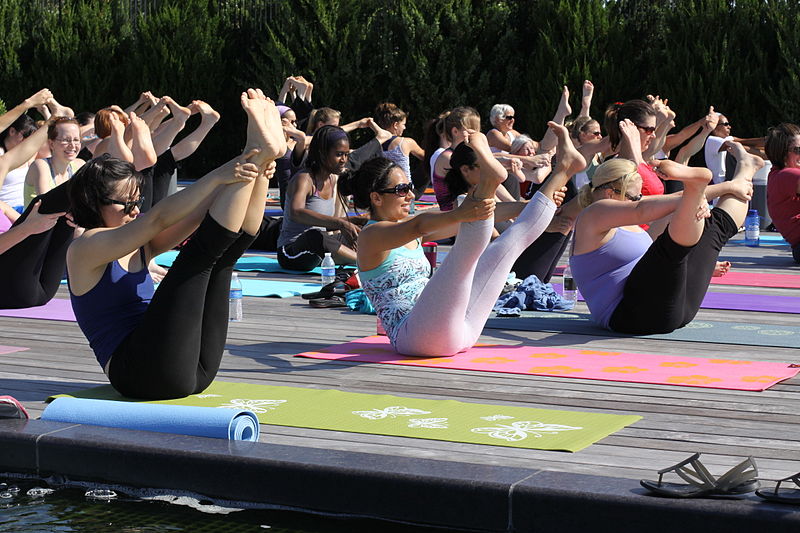
Yoga as exercise is a modern phenomenon which has been influenced by the ancient Indian practice of hatha yoga. It involves holding stretches as a kind of low-impact physical exercise, and is often used for therapeutic purposes. Yoga in this sense often occurs in a class and may involve meditation, imagery, breath work and music.
Both the meditative and the exercise components of hatha yoga have been researched for both specific and non-specific fitness and health benefits. Hatha yoga has been studied as an intervention for many conditions, including back pain, stress, and depression.

A survey released in December 2008 by the US National Center for Complementary and Integrative Health found that hatha yoga was the sixth most common integrative health approach amongst adults in the United States during 2007, with an estimated six percent of the population participating.

Background and overview.

Yoga has roots in India. The foundational text for yoga is the Yoga Sutras of Patanjali. Yoga came to the attention of an educated western public in the mid 19th century along with other topics of Hindu philosophy. The first Hindu teacher to actively advocate and disseminate aspects of yoga to a western audience was Swami Vivekananda, who toured Europe and the United States in the 1890s 
(however, Vivekananda put little emphasis on the physical practices of Hatha Yoga in his teachings.


Nearly all types of hatha yoga practices include asana, pranayama and savasana.The physical asanas of hatha yoga have a tradition that goes back to at least the 15th century, but they were not widely practiced in India prior to the early 20th century. Hatha yoga was advocated by a number of late 19th to early 20th century gurus in India, including Tirumalai Krishnamacharya in south India, Swami Sivananda in the north, Sri Yogendra in Bombay, and Swami Kuvalayananda in Lonavala, near Bombay. In 1918, Pierre Bernard, the first famous American yogi, opened the Clarkstown Country Club, a retreat center for well-to-do yoga students, in New York State.In the 1960s, several yoga teachers, most notably B.K.S. Iyengar, K. Pattabhi Jois, Swami Vishnu-devananda, and Swami Satchidanandabecame active and popular in the West.
A hatha "yoga boom" followed in the 1980s, as Dean Ornish, MD, a medical researcher and follower of Swami Satchidananda, connected hatha yoga to heart health, legitimizing hatha yoga as a purely physical system of health exercises outside counter culture or esotericismcircles, and unconnected to a religious denomination.Since then, hatha yoga has been used as supplementary therapy for diverse conditions such as cancer, diabetes, and asthma.
The more classical approaches of hatha yoga, such as Iyengar Yoga, move at a more deliberate pace, emphasize proper alignment and execution and hold asanas for a longer time. They aim to gradually improve flexibility, balance, and strength. Other approaches, such as Ashtanga or Power Yoga, shift between asanas quickly and energetically. More recently, contemporary approaches to yoga, developed by Vanda Scaravelli and others, invite students to become their own authority in yoga practice by offering principle-based approaches to yoga that can be applied to any form.

Mental health conditions.

Yoga is a core component of the Mindfulness-based stress reduction (MBSR) program. Drawing from recent research on the mental and physical benefits of practicing yoga, positive psychologists have begun to look deeper into the possibilities of utilizing yoga to improve life for people even in the absence of disease.


The therapeutic benefits of yoga have been discussed by van der Kolk, who explains that because regulation of physical movement is a fundamental priority of the nervous system, focusing on and developing an awareness of physical movement can lead to improved synchrony between mind and body. This is beneficial, he says, especially for those suffering from psychological conditions such as depression and PTSD (the focus of van der Kolk's work), because an improved sense of connectedness between mind and body give rise to enhanced control and understanding of their "inner sensations" and state of being.
A 2010 literature review of the research on the use of Hatha Yoga for treating depression said that preliminary research suggests that Hatha Yoga may be effective in the management of depression. Both the exercise and the mindfulness meditation components may be helpful. However the review cautioned that "Although results from these trials are encouraging, they should be viewed as very preliminary because the trials, as a group, suffered from substantial methodological limitations.
A 2015 systematic review on the effect of yoga on mood and the brain concluded that "yoga is associated with biological changes in blood pressure, heart rate, cortisol or cytokine levels. It is therefore plausible that yoga may affect mood via SNS and HPA axis regulation. The same review also points to a lack of research in this field and recommends more methodological rigor be applied to future RCTs to solidify these conclusions.
There is some evidence that exercise programs may help people with dementia perform their daily activities.There has been no found benefit to treating attention deficit hyperactivity disorder.There is some evidence supporting yoga as an alternative treatment for insomnia, however it is not of good quality and it is not clear whether yoga works any better than general relaxation.


Physical health conditions.


There is evidence that Hatha Yoga may be effective in the management of chronic, but not acute, low back pain. Only weak evidence exists to support the use of Hatha Yoga as a complementary therapy for helping people with rheumatic diseases, and little is known of the safety of such use.
Although some evidence exists to suggest Hatha Yoga might help people with high blood pressure, overall this evidence is too weak for any recommendation to be made, and little is known of the safety implications of such an approach.There is no evidence of benefit in treatment of epilepsy or menopause-related symptoms. Practice of Hatha Yoga may improve quality-of-life measures in cancer patients.[Hatha Yoga has no effect on the underlying diseases.


Safety:


Although relatively safe, Hatha Yoga is not risk free. Sensible precautions can usefully be taken – for example beginners should avoid advanced moves, Hatha Yoga should not be combined with psychoactive drug use, and competitive Hatha Yoga should be avoided.A small percentage of Hatha Yoga practitioners each year suffer physical injuries analogous to sports injuries.
When using Hatha Yoga as a treatment, patients should inform the teacher of their physical limitations and concerns. Functional limitations should be taken into consideration. Modifications can then be made using props, altering the duration or poses.The practice of Hatha Yoga has been cited as a cause of hyperextension or rotation of the neck, which may be a precipitating factor in cervical artery dissection.

Monday, 11 December 2017

Women's Shopping

A retailer or a shop is a business that presents a selection of goods and offers to trade or sell them to customers for money or other goods. Shopping is an activity in which a customer browses the available goods or services presented by one or more retailers with the intent to purchase a suitable selection of them. In some contexts it may be considered a leisure activity as well as an economic one.
In modern days customer focus is more transferred towards online shopping; worldwide people order products from different regions and online retailers deliver their products to their homes, offices or wherever they want. The B2C (business to consumer) process has made it easy for consumers to select any product online from a retailer's website and have it delivered to the consumer relatively quickly. The consumer does not need to consume his energy by going out to the stores and saves his time and cost of travelling.
The shopping experience may vary, based on a variety of factors including how the customer is treated, convenience, the type of goods being purchased, and mood.
The shopping experience can also be influenced by other shoppers. For example, research from a field experiment found that male and female shoppers who were accidentally touched from behind by other shoppers left a store earlier than people who had not been touched and evaluated brands more negatively, resulting in the Accidental Interpersonal Touch effect.
                                                                 women'shopping

Shopping venues:


Shopping hubs:

A larger commercial zone can be found in many cities, more formally called a central business district, but more commonly called "downtown" in the United States, or in Arab cities, souks. Shopping hubs, or shopping centers, are collections of stores; that is a grouping of several businesses.

Typical examples include shopping malls, town squares, flea markets and bazaars.
A shopping hub or centre, is a collection of retail, entertainment and service stores designed to serve products and services to the surrounding region. Traditionally, shopping hubs were called bazaars or marketplaces which were generally an assortment of stalls lining streets selling a large variety of goods.The modern shopping centre is now different from its antecedents, the stores are commonly in individual buildings or compressed into one large structure (Mall).The first modern shopping mall was The Country Club Plaza in Kansas City which opened in 1922, from there the first enclosed mall was designed by Victor Gruen and opened in 1956 as Southdale Centre in Edina, Minnesota, a suburb of Minneapolis. Malls peaked in America in the 1980s-1990s when many larger malls (more than 37,000 sq m in size) were built, attracting consumers from within a 32 km radius with their luxurious department stores.There are different types of malls around the world, the Superregional malls are very large malls that contain at least five department stores and 300 shops, this mall can appeal to a broad radius (up to a 160-km). A regional mall can contain at least two department stores or "anchor stores".The smaller malls are often called open-air strip centres or mini-marts and are typically attached to a grocery store or supermarket. The smaller malls are less likely to include the same features of a large mall such as an indoor concourse, but are beginning to evolve to become enclosed to comply with all weather and customer preferences.

                                    A group of women window shopping in Toronto, Ontario, Canada in 1937

Marketplaces dating back to the Middle Ages, expanded as shopping centres, such as the New Exchange, opened in 1609 by Robert Cecil in the Strand. Shops started to become important as places for Londoners to meet and socialise and became popular destinations alongside the theatre. Restoration London also saw the growth of luxury buildings as advertisements for social position with speculative architects like Nicholas Barbon and Lionel Cranfield.


                    Bernard Mandeville's work The Fable of the Bees, which justified conspicuous consumption..

Department stores:

The next stage in shopping was the transition from 'single-function' shops selling one type of good, to the department store where a large variety of goods were sold. As economic growth, fueled by the Industrial Revolution at the turn of the 19th-century, steadily expanded, the affluent bourgeois middle-class grew in size and wealth. This urbanized social group was the catalyst for the emergence of the retail revolution of the period. The first reliably dated department store to be established, was Harding, Howell & Co, which opened in 1796 on Pall Mall, London.
This venture was described as being a public retail establishment offering a wide range of consumer goods in different departments. This pioneering shop was closed down in 1820 when the business partnership was dissolved. Department stores were established on a large scale from the 1840s and 50s, in France, the United Kingdom and the US..


Pricing and negotiation

The pricing technique used by most retailers is cost-plus pricing. This involves adding a markup amount (or percentage) to the retailers' cost. Another common technique is manufacturers suggested list pricing. This simply involves charging the amount suggested by the manufacturer and usually printed on the product by the manufacturer.
In Western countries, retail prices can be referred to as psychological prices or odd prices: a little less than a round number, In Chinese societies, prices are generally either a round number or sometimes some lucky number. This creates price points.
Often, prices are fixed and price discrimination can lead to a bargaining situation often called haggling, a negotiation about the price. Economists see this as determining how the transaction's total economic surplus will be divided between consumers and producers. Neither party has a clear advantage because the threat of no sale exists, in which case the surplus would vanish for both.


Women in the workforce


Women in the workforce earning wages or a salary are part of a modern phenomenon, one that developed at the same time as the growth of paid employment for men, but women have been challenged by inequality in the workforce. Until modern times, legal and cultural practices, combined with the inertia of longstanding religious and educational conventions, restricted women's entry and participation in the workforce. Economic dependency upon men, and consequently the poor socio-economic status of women, have had the same impact, particularly as occupations have become professionalized over the 19th and 20th centuries.
                                                                                                                                                                                                                                                                                                                                           
                                                                                                                                                                                      Women's lack of access to higher education had effectively excluded them from the practice of well-paid and high status occupations. Entry of women into the higher professions like law and medicine was delayed in most countries due to women being denied entry to universities and qualification for degrees; for example, Cambridge University only fully validated degrees for women late in 1947, and even then only after much opposition and acrimonious debate.Women were largely limited to low-paid and poor status occupations for most of the 19th and 20th centuries, or earned less pay than men for doing the same work. However, through the 20th century, public perceptions of paid work shifted as the workforce increasingly moved to office jobs that do not require heavy labor, and women increasingly acquired the higher education that led to better-compensated, longer-term careers rather than lower-skilled, shorter-term jobs. Despite this, women are still at a disadvantage compared to men because of motherhood. Women are viewed as the primary caregiver to children still to this day, so their pay is lowered when they have children because businesses do not expect them to stay long after the birth.

The increasing rates of women contributing in the work force has led to a more equal disbursement of hours worked across the regions of the world.However, in western European countries the nature of women's employment participation remains markedly different from that of men. For example, few women are in continuous full-time employment after the birth of a first child due to the lack of childcare and because women in Britain lose 9% of their wage after their first child and 16% after their second child.

Although access to paying occupations (the "workforce") has been and remains unequal in many occupations and places around the world, scholars sometimes distinguish between "work" and "paying work", including in their analysis a broader spectrum of labor such as uncompensated household work, childcare, eldercare, and family subsistence farming.


Women still contribute to their communities in many regions mainly through agricultural work. In Southern Asia, Western Asia, and Africa, only 20% of women work at paid non-agricultural jobs. Worldwide, women's rate of paid employment outside of agriculture grew to 41% by 2008.
One of the main forms of paid employment for women worldwide is actually a traditional one, that of the market "hawker". Women have worked outside the home as vendors at markets since ancient times in many parts of the world, such as Central America, South Asia, and Africa.
During the 20th century, the most significant global shift in women's paid employment came from the spread of global travel and the development of a large migrant workforce of women domestic workers seeking jobs outside of their native country. The Philippines is a major source of female domestic workers. Before the 1990s, the majority of Filipinos working outside the Philippines were male, but by 2012, an estimated 63% of Filipinos working overseas were female.
Estimates of Filipino women working overseas are in the millions. Over 138,000 new domestic workers gained permission to work overseas in 2012, a number that grew 12% from the previous year.Overseas employment often results in the women leaving their own children behind in the Philippines to be cared for by relatives. Domestic employees from the Philippines and other countries have also been subject to exploitation and sex and money extreme abuse, for example in several countries in the Middle East, where they are often employed. It is estimated that remittances from overseas workers (both male and female) bring $1 billion (USD) per month to the Philippines.

Workforce participation by sector:

Women and men often participate in economic sectors in sharply different proportions, a result of gender clustering in occupations. Reasons for this may include a traditional association of certain types of work with a particular gender. There is a wide range of other possible economic, social and cultural variables that impact the gender distribution in different occupations, including within a region or country. An averaging of statistics gathered by the United Nations for 2004 through 2007 reflects these differences (totals may not add up to 100% due to rounding):

Sectoral distribution of employed persons, by sector and sex (2004 through 2007)
RegionAgricultureIndustryServices
Africa43% women / 42% men11% women / 20% men46% women / 39% men
Asia (excluding China)32% women / 26% men12% women / 25% men56% women / 49% men
Latin America and the Caribbean7% women / 22% men13% women / 27% men80% women / 51% men
Europe and other more developed regions6% women / 8% men15% women / 36% men79% women / 55% men
More detailed statistics show large differences even within these regions. For example, 11% of employed women in East Asia are employed in agriculture, a number that rises to 55% in South Asia; 70% of women in Southern Africa are employed in the service sector, while in Eastern, Middle, and Western Africa this number is 26%.

Occupational Dissimilarity Index:

Choice of occupation is considered to be one of the key factors contributing to the male-female wage differential. In other words, careers with a majority of female employees tend to pay less than careers that employ a majority of males. This is different from direct wage discrimination within occupations, as males in the female dominated professions will also make lower than average wages and the women in the male dominated occupations usually make higher than average wages. The occupational dissimilarity index is a measure from 0 to 100;it measures the percent of laborers that would need to be rearranged into a job typically done by the opposite sex in order for the wage differential to disappear. In 1960, the dissimilarity index for the United States was measured at 62. It has dropped since then, but at 47 in 2000, is still one of the highest of any developed nation.

Organizations formed by Women for rights:

In the nineteenth century women became involved in organizations dedicated to social reform.In 1903 The National Women's Trade Union League (WTUL) is established to advocate for improved wages and working conditions for women. In 1920 The Women’s Bureau of the Department of Labor was formed to create equal rights and a safe workplace for women. In 1956 a group called Financial Women’s Association (FWA), was formed. It is an organization established by a group of Wall Street women. The goal was: to advance professionalism in finance and in the financial services industry with special emphasis on the role and development of women, to attain greater recognition for women’s achievements in business, and to encourage women to seek career opportunities in finance and business.In 1966 the National Organization for Women (NOW) was founded by a group of feminists including Betty Friedan. The largest women's rights group in the U.S., NOW seeks to end sexual discrimination, especially in the workplace, by means of legislative lobbying, litigation, and public demonstrations. NOW has 500,000 contributing members and 550 chapters in all 50 states and the District of Columbia. Founded in 1972, the National Association of Female Executives (NAFE) provides education, networking and public advocacy to empower its members to achieve career success and financial security. Members are women executives, business owners, entrepreneurs and others who are committed to NAFE’s mission: the advancement of women in the workplace. Many of these organizations led to legal action and protecting women's rights as workers and empowered women in the workplace.

Laws protecting women's rights as workers:


International laws protecting women's rights as workers exist through the efforts of various international bodies. On June 16, 2011, the International Labour Organization (ILO) passed C189 Domestic Workers Convention, 2011, binding signatories to regulations intended to end abuses of migrant domestic workers. It was anticipated that the Convention would put pressure on non-ratifying countries to support changes to their own laws to meet the change in international standards protecting domestic workers.Also in 2011, Hong Kong's High Court struck down a law preventing domestic workers from having residency rights granted to other foreign workers, a move that affected an estimated 100,000 domestic workers in Hong Kong.
The ILO has previously ratified the Equal Remuneration Convention in 1951, which came into force in 1953, the Discrimination (Employment and Occupation) Convention, which went into force in 1960 and the Maternity Protection Convention, 2000, which went into force in 2002. In 1966, the United Nations General Assembly adopted the International Covenant on Economic, Social and Cultural Rights, which went into force in 1976. UNESCO also adopted the Convention against Discrimination in Education in 1960, which came into force in 1962. The International Convention on the Protection of the Rights of All Migrant Workers and Members of Their Families, adopted by the United Nations General Assembly, went into force in 2003. The Home Work Convention, adopted by the ILO, went into force in 2000;the Convention protects the rights of persons doing paid work out of their home, which is frequently women workers. It offers equal protection regarding working conditions, safety, remuneration, social security protection, access to training, minimum age of employment, and maternity protection.
Human trafficking often targets young women who are abducted and sent outside their own country to work as domestic workers, often in conditions of extreme exploitation. A number of international laws have been ratified to address human trafficking of women and children.
But these laws are not being put in effect.
Maternity Rights and Child- Care- The Maternity protection measures are put in place to insure that women will not be discriminated against in the work place environment once they return from having a child. They should also not be exposed to any health hazards while they are pregnant and at work. They are allowed time off for maternity leave as well, which allows them to bond with their child and this aspect of development is crucial for infants to gain proper attachment skills. Employers are expected to hold to these policies. Yet many women on maternity leave receive very small amounts of time off to allow for their health along with their babies health. The amount of time allowed for maternity leave as well as the pay for maternity leave varies by country, with Sweden having the longest amount off with 68 weeks and The United States being one of the worst with the typical being 12 weeks without pay. (Burn, S. M. (2005). Women across cultures: A global perspective. New York: McGraw-Hill.)

Women in workforce leadership:


Female decision-makers from around Europe are organized in several national and European wide networks. The networks aim to promote women in decision-making positions in politics and the economy across Europe. These networks were founded in the 1980s and are often very different from the "service clubs" founded in the early days of the century, like Soroptimist and Zontas.
"Women in Management" is about women in business in usually male-dominated areas. Their motivation, their ideas and leadership styles and their ability to enter into leadership positions is the subject of most of the different networks.
As of 2009, women represented 20.9% of parliament in Europe (both houses) and 18.4% world average.
As of 2009, 90 women serve in the U.S. Congress: 18 women serve in the Senate, and 73 women serve in the House Women hold about three percent of executive positions.
In the private sector, men still represent 9 out of 10 board members in European blue-chip companies, The discrepancy is widest at the very top: only 3% of these companies have a woman presiding over the highest decision-making body.
List of members of the European Network of Women in Decision-making in Politics and the Economy:
  • Committee of Women Elected Representatives of Local and Regional Authorities (Council of European Municipalities and Regions)
  • BPW Europe, Business and Professional Women – Europe
  • Association of Organisations of Mediterranean Businesswomen
  • Eurochambres Women's Network
  • European Platform of Women Scientists
  • Network of Parliamentary Committees for Equal Opportunities for Women and Men in the European Union
  • European Network to Promote Women's Entrepreneurship
  • European Women's Lobby
  • European Women's Lawyers Association
  • CEE Network for Gender Issues
  • European Women Inventors and Innovators Network
  • European Women's Management Development International Network, EWMD
  • Femanet – Eurocadres
  • European Professional Women's Network, EPWN
  • Women's Forum for the Economy and the Society
The European Union Commission has created a platform for all these networks. It also funded the Women to the Top program in 2003–2005 to bring more women into top management.
Some organizations have been created to promote the presence of women in top responsibilities, in politics and business. One example is EWMD European Women's Management Development (cited above), a European and international network of individual and corporate members, drawn from professional organisations. Members are from all areas of business, education, politics and culture.
Women who are born into the upper class rather than the middle or lower class have a much better chance at holding higher positions of power in the work force if they choose to enter it.

Barriers to equal participation:


As gender roles have followed the formation of agricultural and then industrial societies, newly developed professions and fields of occupation have been frequently inflected by gender. Some examples of the ways in which gender affects a field include:
  • Prohibitions or restrictions on members of a particular gender entering a field or studying a field;
  • Discrimination within a field, including wage, management, and prestige hierarchies;
  • Expectation that mothers, rather than fathers, should be the primary childcare providers.
Note that these gender restrictions may not be universal in time and place, and that they operate to restrict both men and women. However, in practice, norms and laws have historically restricted women's access to particular occupations;civil rights laws and cases have thus primarily focused on equal access to and participation by women in the workforce. These barriers may also be manifested in hidden bias and by means of many micro inequities.
Many women face issues with sexual abuse while working in agriculture fields as well. Many of the women who work in these fields are undocumented and so supervisors or other male workers may take advantage of that. These women may suffer sexual abuse in order to keep their jobs and they cannot report the incident to the police because the fact that they are documented will be brought up and may be deported.

Access to education and training:

A number of occupations became "professionalized" through the 19th and 20th centuries, gaining regulatory bodies, and passing laws or regulations requiring particular higher educational requirements. As women's access to higher education was often limited, this effectively restricted women's participation in these professionalizing occupations. For instance, women were completely forbidden access to Cambridge University until 1868, and were encumbered with a variety of restrictions until 1987 when the university adopted an equal opportunity policy.

                                                                                                                                                                                                                        
Numerous other institutions in the United States and Western Europe began opening their doors to women over the same period of time, but  access to higher education remains a significant barrier to women's full participation in the workforce in developing countries. Even where access to higher education is formally available, women's access to the full range of occupational choices is significantly limited where access to primary education is limited through social custom.

Access to capital:

Women's access to occupations requiring capital outlays is also hindered by their unequal access (statistically) to capital;this affects occupations such as entrepreneur and small business owner, farm ownership, and investor. Numerous microloan programs attempt to redress this imbalance, targeting women for loans or grants to establish start-up businesses or farms, having determined that aid targeted to women can disproportionately benefit a nation's economy.While research has shown that women cultivate more than half the world's food — in sub-Saharan Africa and the Caribbean, women are responsible for up to 80% of food production — most such work is family subsistence labor, and often the family property is legally owned by the men in the family.

Discrimination within occupations:


The idea that men and women are naturally suited for different occupations is known as horizontal segregation.
Statistical discrimination in the workplace is unintentional discrimination based on the presumed probability that a worker will or will not remain with the company for a long period of time. Specific to women, since employers believe that women are more likely to drop out of the labor force to have kids, or work part-time while they are raising kids, this tends to hurt their chances for job advancement. They are passed up for promotions because of the possibility that they may leave, and are in some cases placed in positions with little opportunity for upward mobility to begin with based on these same stereotypes.
Women continue to earn less money than men, despite establishing equal pay laws.
According to textbook Race, Class, and Gender:An Anthology, women are at a higher risk of financial disadvantage in modern day society than men. Statistical findings suggest that women are under paid for similar jobs men complete despite having the same qualifications. The statistical data collected by the U.S. Department of Labor suggests that women are discriminated against in the workforce based on gender. The textbook reads, “Women’s wages are also more volatile than men’s wages, and women face a much higher risk of seeing large drops in income than do men” (Kennedy 2008). Anderson clearly demonstrates a significant difference between men and women in the workforce in regards to pay. Women are left more exposed to financial devastation and unemployment. The textbook also mentions that women are often give public positions versus private or leadership positions despite having appropriate work experience, higher education, or necessary skills to qualify. According to the Joint Economic Committee, “Among women heading families, the unemployment rate has grown and is higher than the national unemployment rate and twice as high as that for either married men or married women” (Joint Economic Committee, 2009). In other words, unmarried women who are the head of household are more vulnerable to financial disadvantage than married men or women. The unemployment rate of women compared to men suggests that single women are discriminated against based on gender. Anderson writes, “All women are disproportionately at risk in the current foreclosure crisis, since women are 32% more likely than men to have subprime mortgages (One-third of women, compared to one-fourth of men, have subprime mortgages; and, the disparity between women and men increases in higher income brackets)” (Anderson 265). The statistical information illustrates the dramatic difference between men and women in regards to finances. It can be inferred that men are favored in the workforce over women. Women are discriminated against based on their gender and thus are more likely to struggle financially because of discriminatory employers.

Actions and inactions of women themselves:


Through a process known as "employee clustering", employees tend to be grouped throughout the workplace both spatially and socially with those of a similar status job. Women are no exception and tend to be grouped with other women making comparable amounts of money. They compare wages with the women around them and believe their salaries are fair because they are average. Some women are content with their lack of wage equality with men in the same positions because they are unaware of just how vast the inequality is.
Furthermore, women as a whole tend to be less assertive and confrontational. One of the factors contributing to the higher proportion of raises going to men is the simple fact that men tend to ask for raises more often than women, and are more aggressive when doing so.Women, and men, are socialized at young ages into these roles. School-age boys and girls have been noted as enacting the same aggressive and passive characteristics, respectively, in educational settings that we see in adults in the workplace. Boys are more likely to be pushed competitively in school, and sports, to be dominant. The idea that “winning is everything” is not emphasized to the same extent for girls and therefore they are less likely to seek recognition for their work. 
An additional issue that contributes to income inequality by gender is that women are much more likely than men to take "breaks" in their careers to have children, often remaining out of the workforce for extended periods of time, while men in the same role or occupation (or other women who do not leave the workforce) most likely are continuing to earn promotions and/or merit-based salary increases. When a woman in this scenario re-enters the workforce, she may be offered a smaller salary or a lower position than she might have merited had she remained in the workforce alongside her colleagues (both male and female) who have not interrupted their careers.

Gender inequality by social class:

In the last 50 years there have been great changes toward gender equality in industrialised nations such as the United States of America. With the feminist movement of the 1960s, women began to enter the workforce in great numbers. Women had also had high labor market participation during World War II as so many male soldiers were away, women had to take up jobs to support their family and keep their local economy on track. Many of these women dropped right back out of the labor force when the men returned home from war to raise children born in the generation of the baby boomers. In the late 1960s when women began entering the labor force in record numbers, they were entering in addition to all of the men, as opposed to substituting for men during the war. This dynamic shift from the one-earner household to the two-earner household dramatically changed the socioeconomic class system of industrialised nations in the post-war period.

Effects on the middle and upper classes:

The addition of women into the workforce was one of the key factors that has increased social mobility over the last 50 years, although this has stalled in recent decades for both genders. Female children of the middle and upper classes had increased access to higher education, and thanks to job equality, were able to attain higher-paying and higher-prestige jobs than ever before. Due to the dramatic increase in availability of birth control, these high status women were able to delay marriage and child-bearing until they had completed their education and advanced their careers to their desired positions. In 2001, the survey on sexual harassment at workplace conducted by women's nonprofit organisation Sakshi among 2,410 respondents in government and non-government sectors, in five States recorded 53 per cent saying that both sexes don't get equal opportunities, 50 per cent women are treated unfairly by employers and co-workers, 59 per cent have heard sexist remarks or jokes, 32 per cent have been exposed to pornography or literature degrading women.

Effects on the working class:


Women in lower wage jobs are more likely to be subject to wage discrimination. They are more likely to bring home far less than their male counterparts with equal job status, and get far less help with housework from their husbands than the high-earning women. Women with low educational attainment entering the workforce in mass quantity lowered earnings for some men, as the women brought about a lot more job competition. The lowered relative earnings of the men and increase in birth control made marriage prospects harder for lower income women.
For the first time in the history of this country,there were distinctive socioeconomic stratification among women as there has been among men for centuries. This deepened the inequality between the upper/middle and lower/working classes. Prior to the feminist movement, the socioeconomic status of a family was based almost solely on the husband/father's occupation. Women who were now attaining high status jobs were attractive partners to men with high status jobs, so the high earners married the high earners and the low earners married the low earners. In other words, the rich got richer and the poor stayed the same, and have had increased difficulty competing in the economy.

History:


19th century

Women have worked at agricultural tasks since ancient times, and continue to do so around the world. The Industrial Revolution of the late 18th and early 19th centuries changed the nature of work in Europe and other countries of the Western world. Working for a wage, and eventually a salary, became part of urban life. Initially, women were to be found doing even the hardest physical labor, including working as "hurriers" hauling heavy coal carts through mine shafts in Great Britain, a job that also employed many children. This ended after government intervention and the passing of the Mines and Collieries Act 1842, an early attempt at regulating the workplace.
During the 19th century, an increasing number of women in Western countries took jobs in factories, such as textile mills, or on assembly lines for machinery or other goods. Women also worked as "hawkers" of produce, flowers, and other market goods, and bred small animals in the working-class areas of London. Piecework, which involved needlework (weaving, embroidery, winding wool or silk) that paid by the piece completed, was the most common employment for women in 19th century Great Britain. It was poorly paid, and involved long hours, up to 14 hours per day to earn enough wages to survive.Working-class women were usually involved in some form of paid employment, as it provided some insurance against the possibility that their husband might become too ill or injured to support the family. During the era before workers' compensation for disability or illness, the loss of a husband's wages could result in the entire family being sent to a Victorian workhouse to pay debts.

Occupational safety and health:


Women tend to have different occupational hazards and health issues than men in the workplace. Women get carpal tunnel syndrome, tendonitis, anxiety disorders, stress, respiratory diseases, and infectious diseases due to their work at higher rates than men. The reasons for these differences may be differences in biology or in the work that women are performing. Women's higher rates of job-related stress may be due to the fact that women are often caregivers at home and do contingent work and contract work at a much higher rate than men. Another significant occupational hazard for women is homicide, which was the second most frequent cause of death on the job for women in 2011, making up 26% of workplace deaths in women.Immigrant women are at higher risk for occupational injury than native-born women in the United States, due to higher rates of employment in dangerous industries.
Women are at lower risk for work-related death than men. However, personal protective equipment is usually designed for typical male proportions, which can create hazards for women who have ill-fitting equipment. Women are less likely to report an occupational injury than men.


http://www.kaamkhoj.co.in/